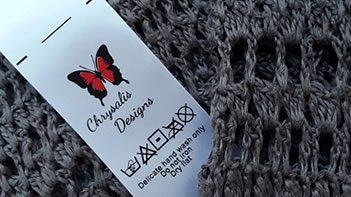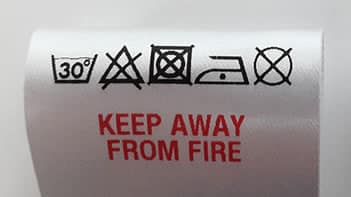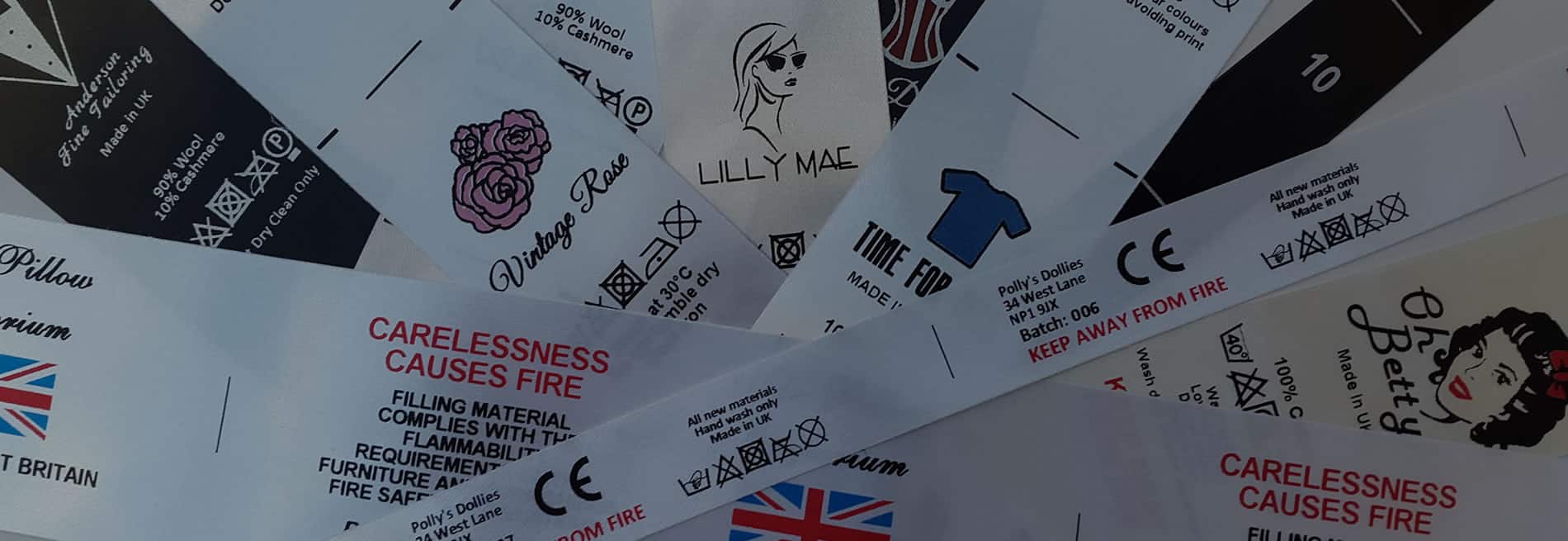
Wash Care Symbols

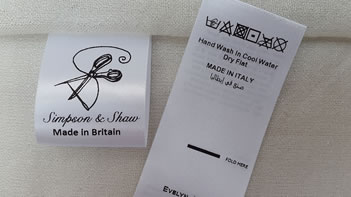
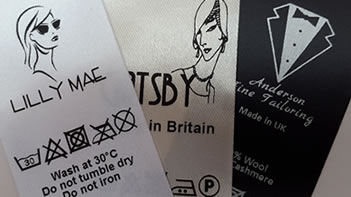
Care labels indicate how to clean textile articles in the best possible way.

Care symbols give all the necessary information on washing, bleaching, ironing, dry cleaning and tumble drying. Without this information, the consumer can hardly decide on the appropriate care treatment because it does not depend only on the main fabric which composes the textile article. Indeed, all the components of the said textile article shall be taken into account : other fibers, accessories, but also dyeing, finishing treatments and texture.

Using care labels provides the consumer with care information he does not have to decide on. Indeed, the consumer does not have experience and technical support to decide on care treatment.

Observing information given with the symbols, the consumer will avoid wrong treatments and consequently premature wearing out. He will therefore obtain better results.

Care labeling is determined under the responsibility of the garment maker in common interest of textile manufacturers, dry cleaners and of course consumers.

Thus care symbols are recommendations on how to clean a textile article on which they are affixed, they should not be considered as a use guarantee neither as a quality mark.

Symbols refer to maximum permissible treatments that a textile article can bear without irreversible damage. More severe treatments can always be applied.

Washing

This symbol means that textile articles can be cleaned in an aqueous bath. More generally, the washtub symbolizes the domestic washing treatment (by hand or machine).

The number placed inside the washtub indicates the maximum temperature in degree celsius for machine wash.

The hand placed in the washtub means hand wash only.

The washtub can also be underlined (one bar or two bars) to warn the user that a mild or very mild treatment must be used.

SYMBOLS

MAXIMUM WASHING TEMPERATURE

CARE PROCESS

95° C

mechanical action normal
rinsing normal
spinning normal

95° C

mechanical action reduced (1)
rinsing at gradually decreasing temperature
spinning reduced

60° C

mechanical action normal
rinsing normal
spinning normal

60° C

mechanical action reduced (1)
rinsing at gradually decreasing temperature
spinning reduced

40° C

mechanical action normal
rinsing normal
spinning normal

40° C

mechanical action reduced (1)
rinsing at gradually decreasing temperature
spinning reduced

30° C

mechanical action much reduced (1)
rinsing normal
spinning reduced

40° C

hand wash only


do not wash

*

50° C

mechanical action reduced (1)
rinsing at gradually decreasing temperature
spinning reduced

*

40° C

mechanical action much reduced
rinsing normal
spinning normal

Chlorine Based Bleaching

The triangle with Cl inside indicates that the bleaching process
(chlorine process) is possible.

SYMBOLS

CARE PROCESS

Chlorine-based bleaching allowed only in a cold and dilute solution

Do not use chlorine-based bleach

Ironing

Dots placed within the symbols (1, 2 or 3 dots) indicate the maximum temperature in degrees celsius for ironing textile articles.

SYMBOLS

CARE PROCESS

Iron at a maximum sole-plate temperature of 200° C

Iron at a maximum sole-plate temperature of 150° C

Iron at a maximum sole-plate temperature of 110° C (steam iron may be risky)

Do not iron

Dry Cleaning

Letters (A, P and F) in the circle refer to the solvents which may be used by dry cleaners.

Underlining the circle indicates that a specific process should be used (mild process with strict limitations on the addition of water and/or mechanical action and/or temperature during cleaning and/or drying).
In this case, self-service cleaning is not allowed.

SYMBOLS

CARE PROCESS

Dry cleaning in all solvents normally used for dry cleaning with normal cleaning procedures

Dry cleaning in all solvents normally used for dry cleaning except trichloroethylene with normal cleaning procedures. Self-service cleaning is possible

The bar placed under the circle indicates strict limitations on the addition of water and/or mechanical action and/or temperature during cleaning and/or drying. Self-service cleaning is not allowed

Only petroleum solvents may be used with normal cleaning procedures

The bar placed under the circle indicates strict limitations on the addition of water and/or mechanical action and/or temperature during cleaning and/or drying. Self-service cleaning is not allowed

Do not dry clean - no stain removal with solvents

Tumble Dry

The tumble drying symbol (a circle in a square) must be completed by one or two dots for two different levels of temperature.

SYMBOLS

CARE PROCESS

No restrictions concerning the temperature of tumble drying after a washing process

Tumble drying possible at lower temperature setting

(60° C maximum) after a washing process

Do not tumble dry


Treatment Not Permitted
(St. Andrews Cross)

The saint Andrew's cross superimposed on any of the five empty symbols means that the treatment represented by that symbol shall not be used.


Standardisation

GINETEX symbols are also subject to an international standard ISO 3758 " textiles - care labeling code using symbols " published in 1991.

This standard ISO 3758 is the result of an agreement between GINETEX, the owner of the trademarks and ISO International Standardization Organization ; GINETEX being in favour of an international use of the symbols.

The standard ISO 3758 was also published as an European standard EN 23758 in 1994.

Therefore, and because an European standard shall be used in all the European countries, no other system of symbols than GINETEX system may be used in Europe.

Links:


AEDT


AEDT - European Association of National Organisations of Textile Retailers

AISE


AISE : Soap and Detergent International Association

ASTM


ASTM : American Society of Testing and Materials

ATOK


Asociace texilniho

CEN


European Committee for Standardization

CEN


CEN : European Standard Committee

CINET


CINET : International Committee of Textile Care

CRIET


CRIET : European Finishing Industry

ETSA


ETSA : European Textile Services Association

EURATEX


EURATEX : European Textile and Garment Industry

FV Textil


FV Textil - Fachverband der Textilindustrie Österreichs

IAF


IAF : International Apparel Federation


IDRC : International Organisation for Technical Centers in Drycleaning

ISO


ISO - International Organization for Standardization

ISO


ISO : International Standard Organization

ITMF


ITMF : International Textile Manufacturers Federation

SNV


SNV - Schweizerische Normenvereinigung

STR


STR Testing & Inspection AG

Testex


Testex